Some dishes are cooked; others are also inherited. Paella belongs to the latter group: it brings together produce, landscape, memory and a way of sharing a meal. To understand why Valencia is considered its birthplace, we need to look beyond the pan and towards the Albufera's rice fields.
A crop tied to the Valencian landscape
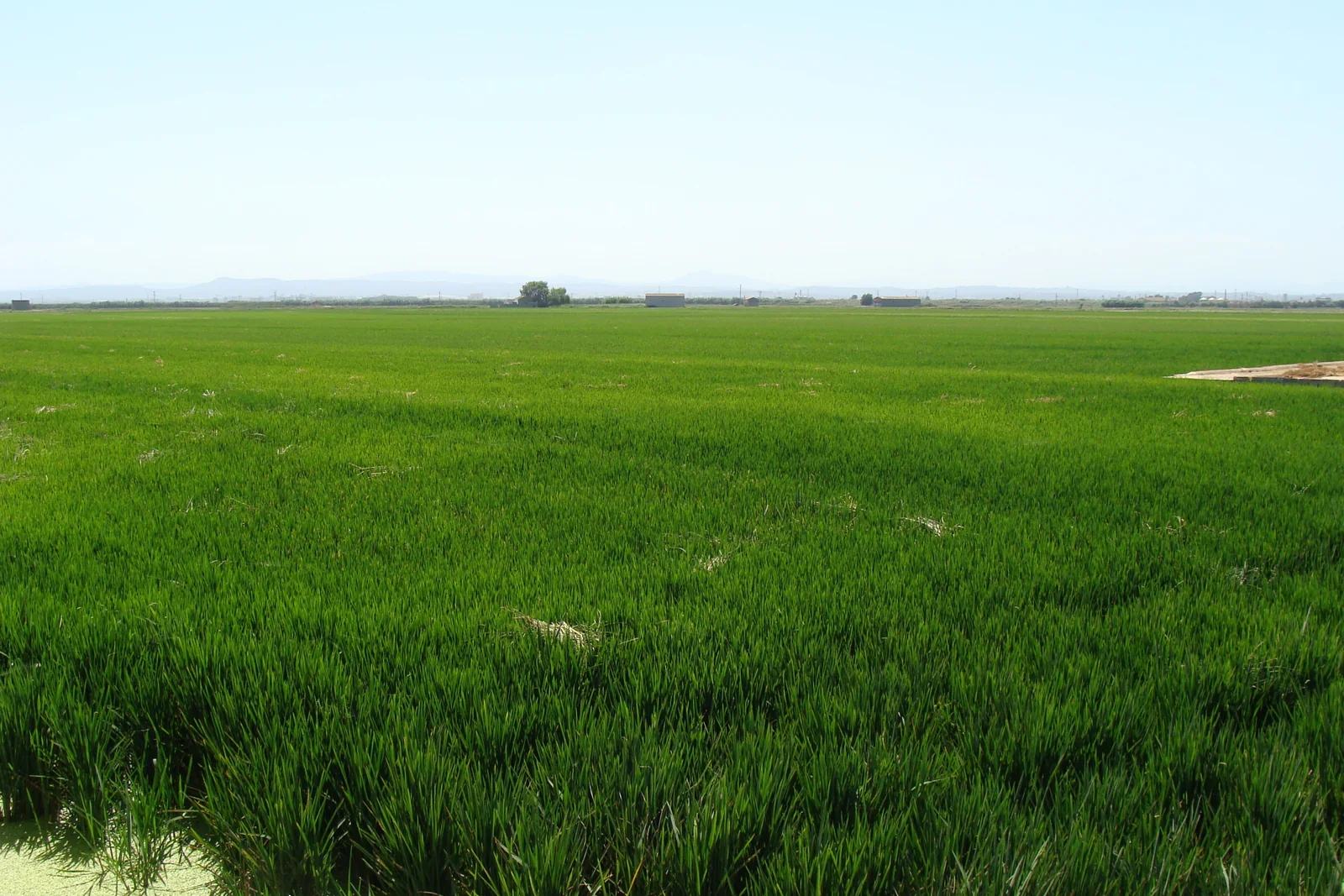
Rice originated far from the Mediterranean, but found particularly favourable conditions in Valencia's wetlands. Over centuries, knowledge of water, irrigation channels and flooding cycles helped establish a distinctive agricultural landscape. The crop became more than an economic activity: it became part of the territory's organisation, its trades and its cooking.
The Albufera is the symbolic heart of this rice culture. The lake, rice fields and nearby settlements form an environment where farming coexists with a valuable wetland ecosystem. The Regulatory Council itself emphasises that rice cultivation helps sustain this ecosystem and an essential part of Valencia's culture, history and social life.
From rural cooking to an international symbol
Tradition places the birth of paella around the Albufera. Valencia's official tourism sources explain that it began as a meal for farm workers, made with rice and the ingredients available from the local farmland and surroundings: vegetables, rabbit, poultry, snails and other produce, depending on the area and season.
Its origins are usually placed around the 16th century, although surviving written references are later. This distinction matters: it allows us to recount the tradition without presenting culinary memory passed down through generations as documented certainty.
The name also reflects a practical style of cooking. In Valencian, paella refers to the wide, shallow pan in which the rice is cooked; the word comes from the Latin patella. Over time, the dish took the name of the utensil and became one of Spain's most recognisable culinary symbols.
A recipe with roots and variations
Traditional Valencian paella is mainly associated with chicken, rabbit, green beans, garrofón beans, tomato, olive oil, water, salt, saffron and rice. Depending on the area or season, ingredients such as snails, duck, artichokes or rosemary may appear. These variations retain a shared connection with the territory: cooking based on rice, local produce and control of the heat.
Not every rice dish cooked in a paella pan is a Valencian paella. Many fish and seafood rice dishes use the same pan and share techniques but belong to other culinary traditions. Distinguishing them lets us appreciate each preparation for what it is, without reducing Valencia's rich rice cuisine to a single recipe.
What the Arroz de Valencia Designation of Origin protects
The reputation of Valencian rice created a need for protection to guarantee its provenance and production conditions. The Regulatory Council of the Arroz de Valencia Designation of Origin was established in 1998. Made up of industry professionals, it verifies compliance with requirements from cultivation through to packaging.
The Designation of Origin protects the rice, not the paella recipe. Certified packaging is identified by the logo and a numerical registration supplied by the Regulatory Council. This mark identifies a product subject to controls covering origin, traceability and quality.
The Council presents three culinary rice varieties—Senia, Bomba and Albufera—with different characteristics when absorbing stock and cooking. The current official specification details the authorised varieties and product requirements. Always read the label, and do not attribute a particular variety to rice unless it is stated on the packaging.
Rice as part of an ecosystem
The rice fields are not merely scenery. Flooding and drying the fields are part of an agricultural cycle that also affects the wetland and the presence of birds and other species. Keeping cultivation compatible with environmental protection helps preserve a landscape whose identity is inseparable from rice.
This relationship between agriculture, nature and cooking explains paella's deep roots. The dish represents a complete chain: a territory capable of growing rice, people who understand water and the land, mills that select the grain, and cooks who transform it using stock, heat and time.
A legacy that reaches Colombia
For Colombian readers, familiar with dishes such as arroz con pollo, arroz atollado and coastal rice preparations, this history offers common ground. These are different cuisines, but they share rice's ability to absorb the flavours of a territory and become a celebratory meal.
J. Montoro extra-grade round-grain rice sold in Colombia bears the Arroz de Valencia Designation of Origin mark. Understanding this identification shows that it is more than an imported ingredient: it is a product tied to a landscape, a rice-growing tradition and recognisable standards of control.