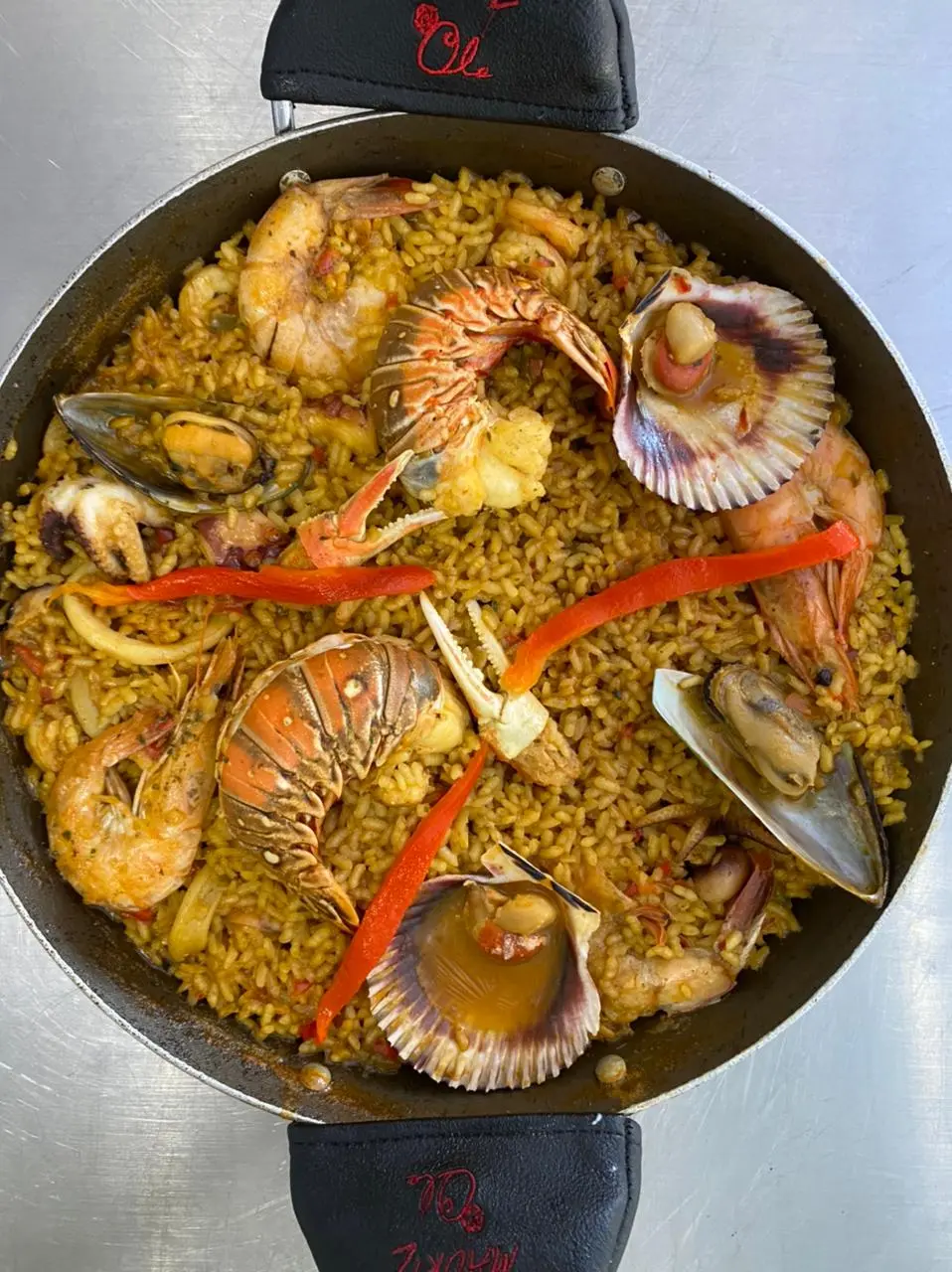
The label “round-grain rice” does not determine the final texture on its own. The cook decides whether the stock evaporates, becomes a light, creamy sauce or remains in the finished dish.
Dry rice dishes
In a dry rice dish, the aim is for the liquid to be absorbed and evaporate by the end of cooking. A wide paella pan encourages a thin layer and rapid evaporation. Once the rice is evenly distributed, avoid stirring: this prevents excessive starch release and helps the grains remain separate.
One part rice to two parts liquid can be a starting point, but it is not a fixed formula. A wide paella pan over high heat loses more liquid than a deep pot. The sofrito, meat and vegetables also contribute water.
Creamy rice dishes
Creamy rice retains a small amount of liquid thickened by starch. It is best prepared in a pot or pan with a little more depth. It can be stirred gently during cooking, although it does not need the constant attention of a risotto.
The right texture is fluid and gently coats the grains. If it forms a solid mound when served, it needs more liquid; if it resembles a soup, too much liquid has been added or the rice has not had time to absorb it and thicken the dish.
Soupy rice dishes
In soupy rice, the stock is part of the finished dish. Use a generous quantity; a deep pot helps retain it. Serve immediately: the rice continues to absorb liquid after the heat is turned off and can turn a soupy dish into a creamy one in just a few minutes.
Four variables worth recording
- Cookware diameter and shape. These determine the thickness of the rice layer and the surface available for evaporation.
- Heat intensity. This changes how quickly the stock reduces.
- Stock temperature. Adding it hot prevents interruptions to cooking.
- Actual cooking time. Use 15–20 minutes as a guide, taste the rice and record your result.
The benefit of a consistent method
A recipe becomes reliable when it is repeated under similar conditions. Weigh the rice, measure the stock, note the cookware and record how much liquid remains at the end. After two or three trials you will have a ratio suited to your kitchen, which is more useful than an isolated figure.